
Tyre Pressure Monitoring System (TPMS)
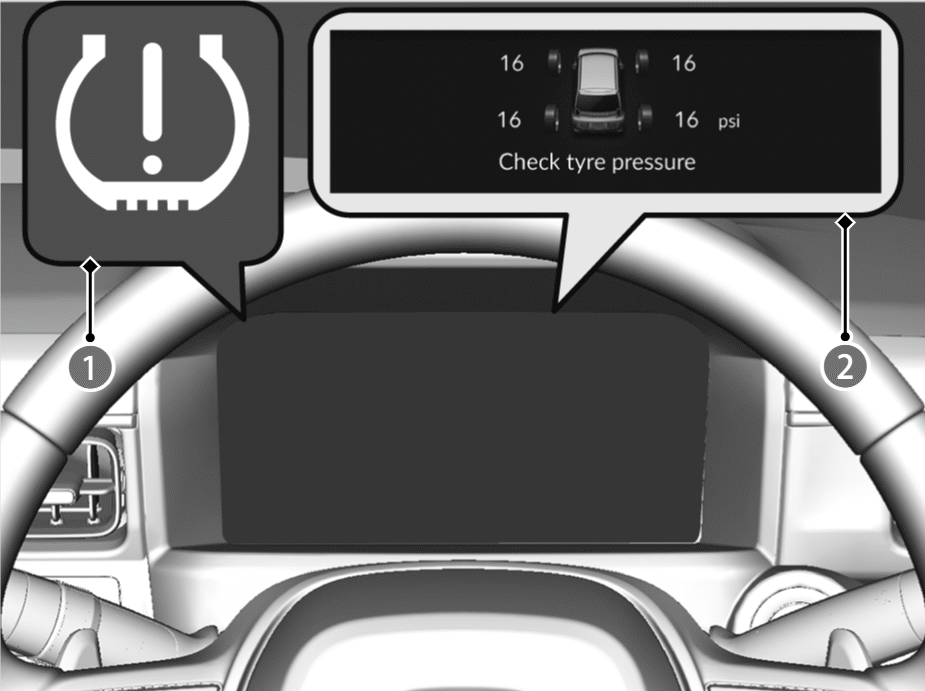
Monitors the tyre pressure while you are driving. If your vehicle’s tyre pressure becomes significantly low, the Low Tyre Pressure/TPMS indicator ( ) comes on and a message (
 ) appears.
- Only use genuine TPMS specified wheels since your vehicle’s wheels are equipped with the low tyre pressure/TPMS sensor. If you drive your vehicle without the genuine TPMS specified wheels, the low tyre pressure/TPMS indicator blinks for one minutes and then stays on.
- Conditions such as low ambient temperature and altitude change directly affect tyre pressure and can trigger the low tyre pressure/TPMS indicator to come on.
- Tyres can become under-inflated in colder weather.
- Tyres can become overinflated in warmer weather.
- The low tyre pressure/TPMS indicator will not come on as a result of overinflation.
- Tyre pressure monitor system problem message may appear if you drive with a tyre not equipped with a TPMS sensor, or if there is a problem with the system.
- The pressure displayed on the driver information interface can be slightly different from the actual pressure as measured by a gauge. If there is a significant difference between the two values, or if the Low Tyre Pressure/TPMS indicator and the message on the driver information interface do not go off after you have inflated the tyre to the specified pressure, have the system checked by a dealer.
Tyre Pressure Monitor
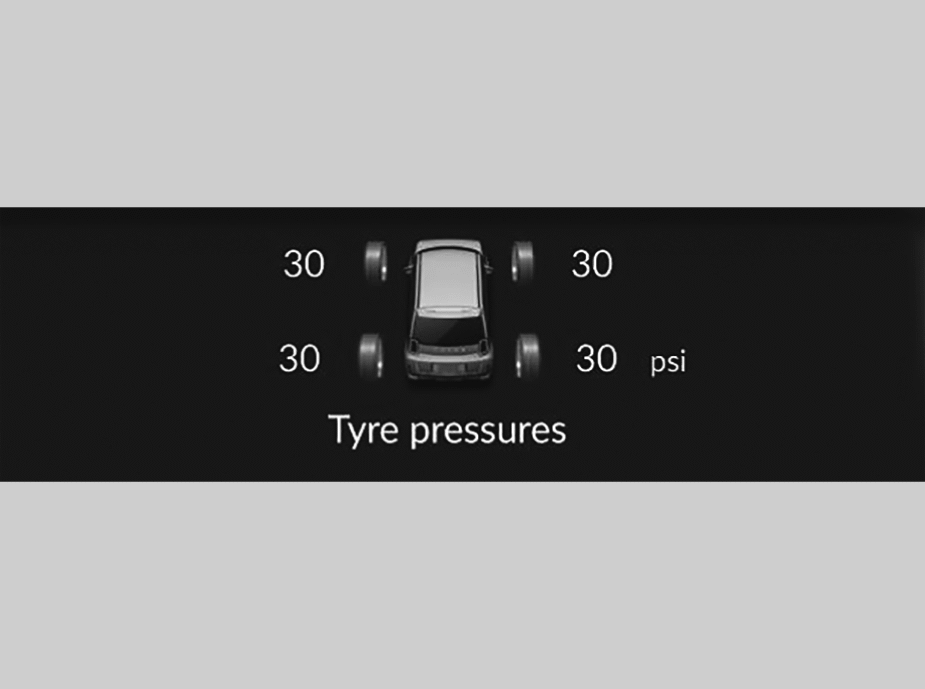
To select the tire pressure monitor, set the power mode to ON, and roll the right selector wheel until you see the tire pressure screen.
- The pressure for each tire is displayed in psi.