
Fastening a Seat Belt
After adjusting a front seat to the proper position, and while sitting upright and well back in the seat:
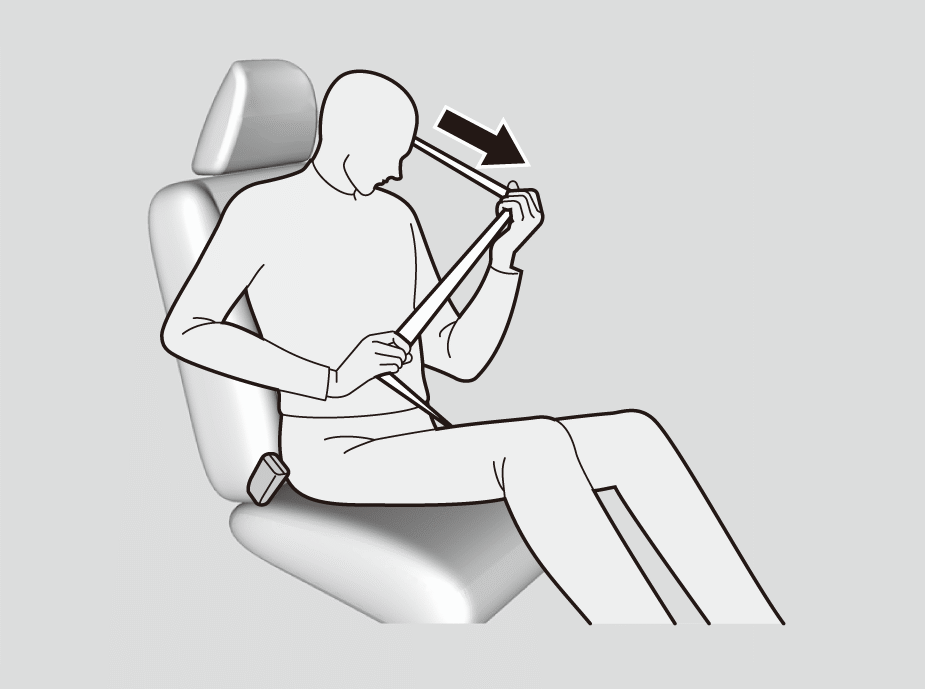
- Pull the seat belt out slowly.
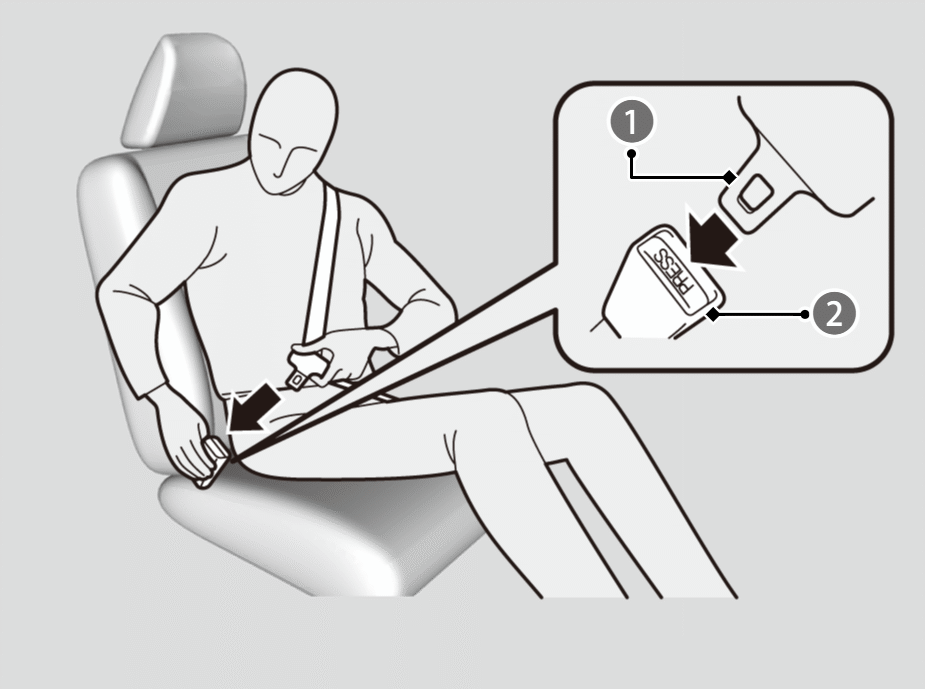
- Insert the latch plate (
 ) into the buckle (
 ), then tug on the belt to make sure the buckle is secure.
- Make sure that the belt is not twisted or caught on anything.
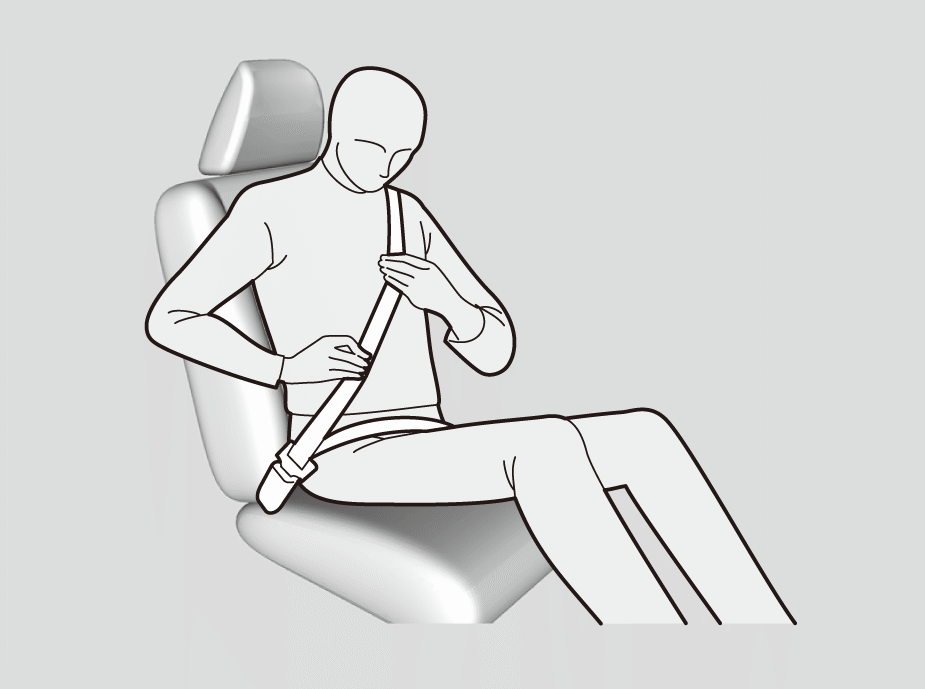
- Position the lap part of the belt as low as possible across your hips (see illustration), then pull up on the shoulder part of the belt so the lap part fits snugly. This lets your strong pelvic bones take the force of a crash and reduces the chance of internal injuries.
- If necessary, pull up on the belt again to remove any slack, then check that the belt rests across the centre of your chest and over your shoulder. This spreads the forces of a crash over the strongest bones in your upper body.
To release the belt, push the red PRESS button and then guide the belt by hand until it has retracted completely.
When exiting the vehicle, be sure the belt is properly stowed so that it will not get caught in the closing door.

 WARNING
Improperly positioning the seat belts can cause serious injury or death in a crash.
Make sure all seat belts are properly positioned before driving.
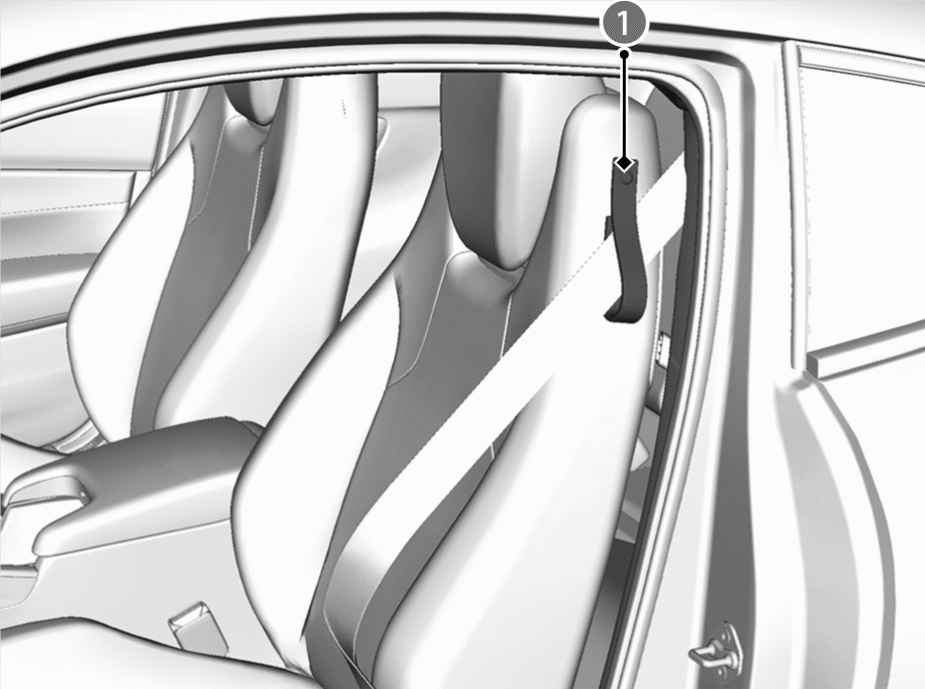
Strap
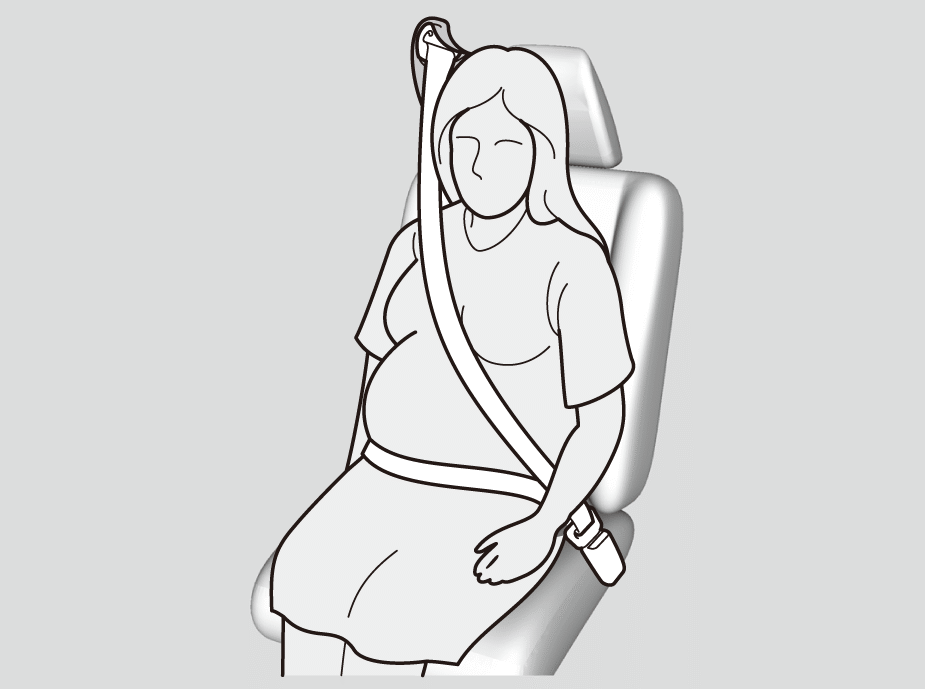
Advice for Pregnant Women
Consider alternative:
If you are pregnant, the best way to protect yourself and your unborn child when driving or riding in a vehicle is to always wear a seat belt. When positioning the seat belt, wear the shoulder belt section across the chest, avoiding the abdomen, and keep the lap belt portion as low as possible across the hips (see illustration).
Each time you have a checkup, ask your doctor if it is okay for you to drive.
- When driving, sit upright and adjust the seat as far back as possible while allowing full control of the vehicle.
- When sitting in the front passenger’s seat, adjust the seat as far back as possible.