
High Voltage System and Battery
This vehicle has high voltage components such as the High Voltage battery, high voltage cables (identified by their orange covers), drive unit, and high temperature parts such as the radiator. Labels with handling warnings are attached to these components.
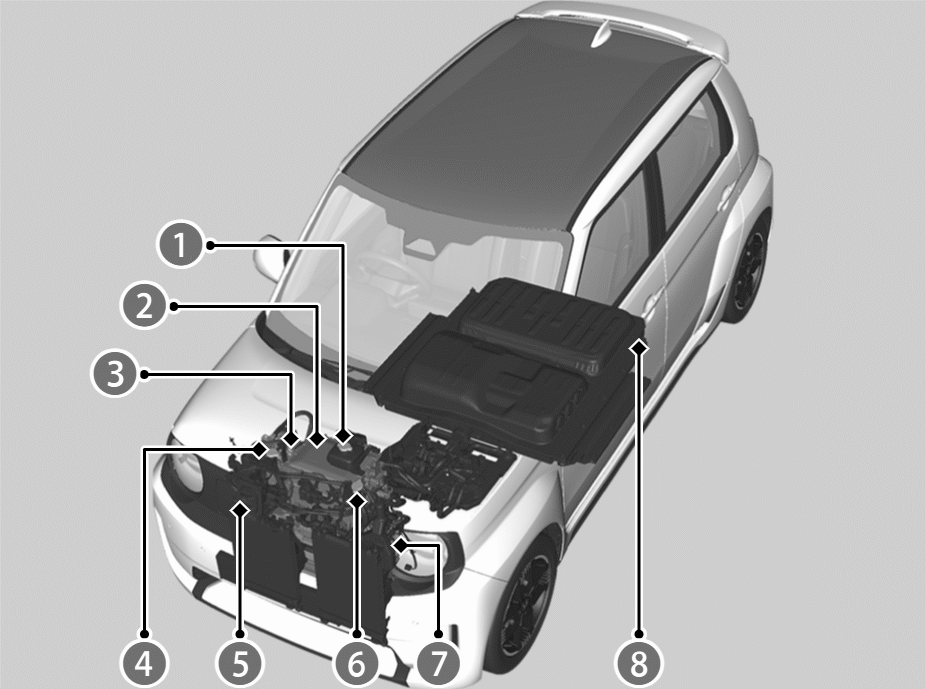

Climate Control Coolant Reserve Tank Cap

Power Control Unit

A/C Compressor

High Voltage System Coolant Tank Cap A

Charge Lid

High Voltage System Coolant Tank Cap B

Electric Motor

High Voltage Battery
 WARNING
This vehicle has high voltage circuits and parts. Failure to observe the following precautions can result in burns or electric shock.
- Do not remove, disassemble, or replace the high voltage parts, cables (orange) or their connectors.
Only a qualified technician should handle any electrical equipment. For inspection and repair, consult a dealer.
Warning Labels
Climate Control Coolant Reserve Tank Cap
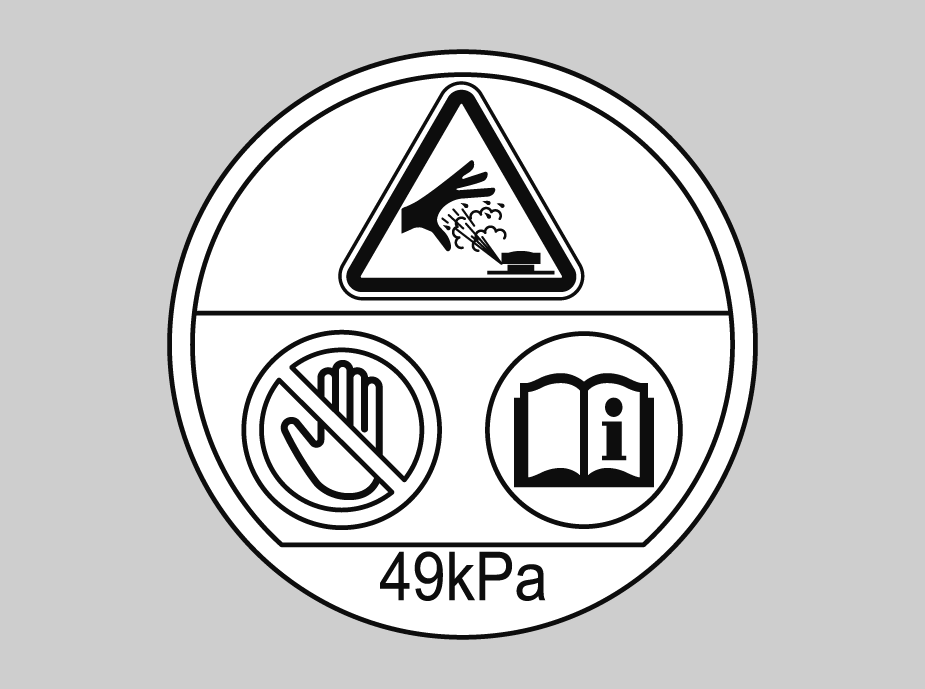
High Voltage System Coolant Tank Cap A, High Voltage System Coolant Tank Cap B
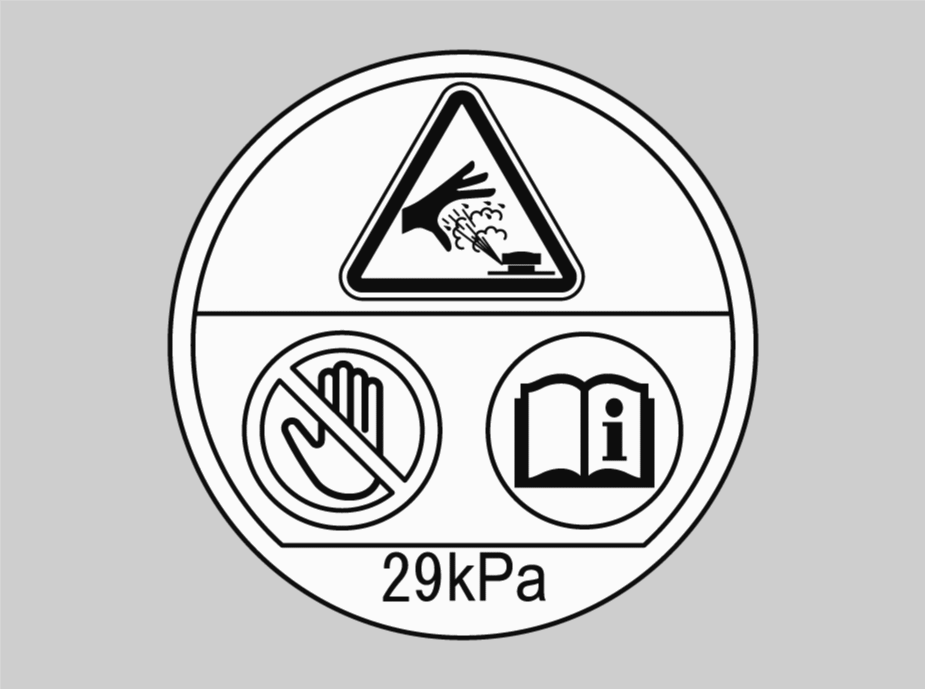
Power Control Unit

Charge Lid
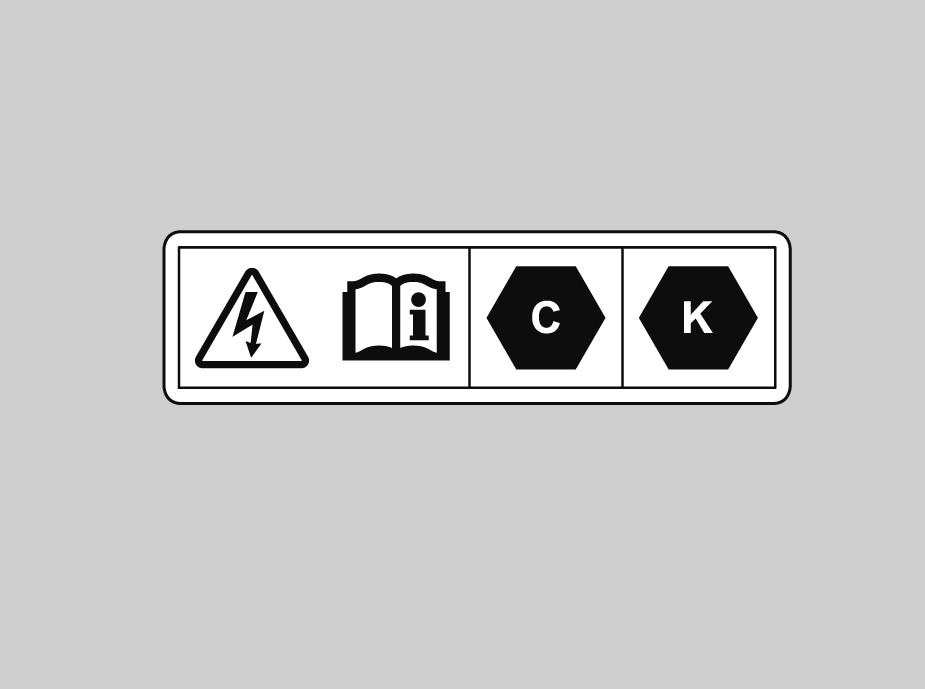
Characteristics of High Voltage Battery
The High Voltage battery gradually discharges even if the vehicle is not in use. As a result, if your vehicle is parked for an extended period of time, the battery level may get low.
Keeping your vehicle’s battery level low can shorten the battery life. To maintain the battery while the vehicle is not in use, recharge the battery at least once every three months. To help extend the lifespan of the battery, it is recommended that you only fully charge the battery just before driving.
- The High Voltage battery drains over time, and under some conditions, drains faster. When the battery life is shortened, this changes the vehicle’s driving distance.
The High Voltage battery life can also be affected by temperature. Parking in extremely hot or cold environments can accelerate battery drain. Extreme high temperatures can affect the battery life. You can minimise the effects by parking the vehicle in the shade during the summer.
If the High Voltage battery is too hot or too cold, it will take longer than usual to charge. Also, driving range is reduced when the temperature is low.
The High Voltage battery’s output may be limited if its temperature is too high, such as when driving in situations that require a high power load immediately after charging, or too low due to low ambient temperature.
Output will return to normal once the battery’s temperature returns to a normal range. If battery output does not return to normal, have your vehicle checked by a dealer.
Battery warming system
When the charging connector is connected to the vehicle and the outside temperature is low, the battery warming system warms the High Voltage battery to maintain starting and driving performance. If the charging connector remains plugged in and the vehicle is not used for a certain period of time, the battery warming system will shut down.
- If the temperature of the High Voltage battery drops to -25 °C or below, the power system and battery warming system will not start. If the High Voltage battery temperature becomes extremely low, wait for the High Voltage battery to warm up as the outside temperature rises, or move your vehicle to a warmer location (via towing or other means).
- The battery warming system does not operate when the 12-volt battery is removed.
Safety Precautions
Attempting to take a High Voltage system component apart or disconnect one of its wires can cause severe electrical shock. Make sure that any maintenance or repairs to the High Voltage system are performed by a Honda dealer.
WARNING
If a severe crash damages your vehicle’s High Voltage system, there is a possibility of electrical shock due to exposed High Voltage components or orange wires. If this happens, do not touch any of the High Voltage system components or any of its orange wires.
The High Voltage battery contains a flammable electrolyte that could leak as a result of a severe crash. Avoid skin or eye contact with the electrolyte as it is corrosive. If you accidentally come into contact with the electrolyte, rinse the exposed skin and flush any exposed eyes with copious amounts of water for a few minutes, and seek medical attention immediately.

Emergency Shutdown System for the High Voltage System
If the vehicle is involved in a crash, the emergency shutdown system will activate depending on the severity of the impact. When the system activates, the High Voltage system automatically shuts down, and the vehicle can no longer move under its own power. To return the High Voltage system back to normal operation, consult a dealer.
When the vehicle is disposed
Honda collects and recycles High Voltage batteries used in its vehicles – consult a dealer for more information.